If you are drawn to neighborhoods with real character, Meridian-Kessler stands out right away. This midtown Indianapolis neighborhood blends early 20th-century architecture, mature trees, and everyday convenience in a way that feels both timeless and livable. If you are wondering what makes Meridian-Kessler homes so appealing, this guide will walk you through the architectural styles, street-by-street feel, and lifestyle features that shape the neighborhood. Let’s dive in.
Why Meridian-Kessler Feels Distinct
Meridian-Kessler is located about four miles north of downtown Indianapolis. According to the Meridian-Kessler Neighborhood Association, the area stretches from 38th Street to Kessler Boulevard, with Meridian Street on the west and the former Monon corridor on the east.
Its identity comes from how it developed. The neighborhood grew rapidly in the 1920s and 1930s after the Broad Ripple interurban line connected the area more directly to the city center. That history still shows up today in the neighborhood’s mostly grid-based layout, with some irregular streets where development happened in stages.
What many buyers notice first is that Meridian-Kessler does not feel like a one-style neighborhood. Instead, it offers a layered streetscape with different home types, lot patterns, and architectural details that reflect its early growth. That variety gives the neighborhood depth and helps each block feel a little different.
Architecture Styles in Meridian-Kessler
Meridian-Kessler is known for having examples of nearly every major residential style from the early 20th century. Local history sources consistently point to American Foursquare, bungalow, Colonial Revival, Tudor Revival, and Classical Revival homes as defining parts of the neighborhood.
That means your home search here can feel very different from one street to the next. Some blocks have simple, solid forms with practical layouts, while others showcase more decorative period details and larger footprints. For buyers who care about architecture, that range is a big part of the appeal.
American Foursquares
American Foursquares are especially common south of 44th Street. These homes are often valued for their balanced shape, efficient layout, and strong street presence.
In practical terms, that can translate into rooms with clear separation, substantial front porches, and a classic look that has stayed attractive over time. For buyers who want historic character without overly ornate detailing, this style often checks the right boxes.
Bungalows
Bungalows appear more often east of College Avenue. They typically bring a lower profile and a more compact scale to the streetscape.
For some buyers, bungalows offer a comfortable blend of charm and manageability. They can be especially appealing if you like original character and a home that feels connected to the lot and front yard.
Tudor Revival Homes
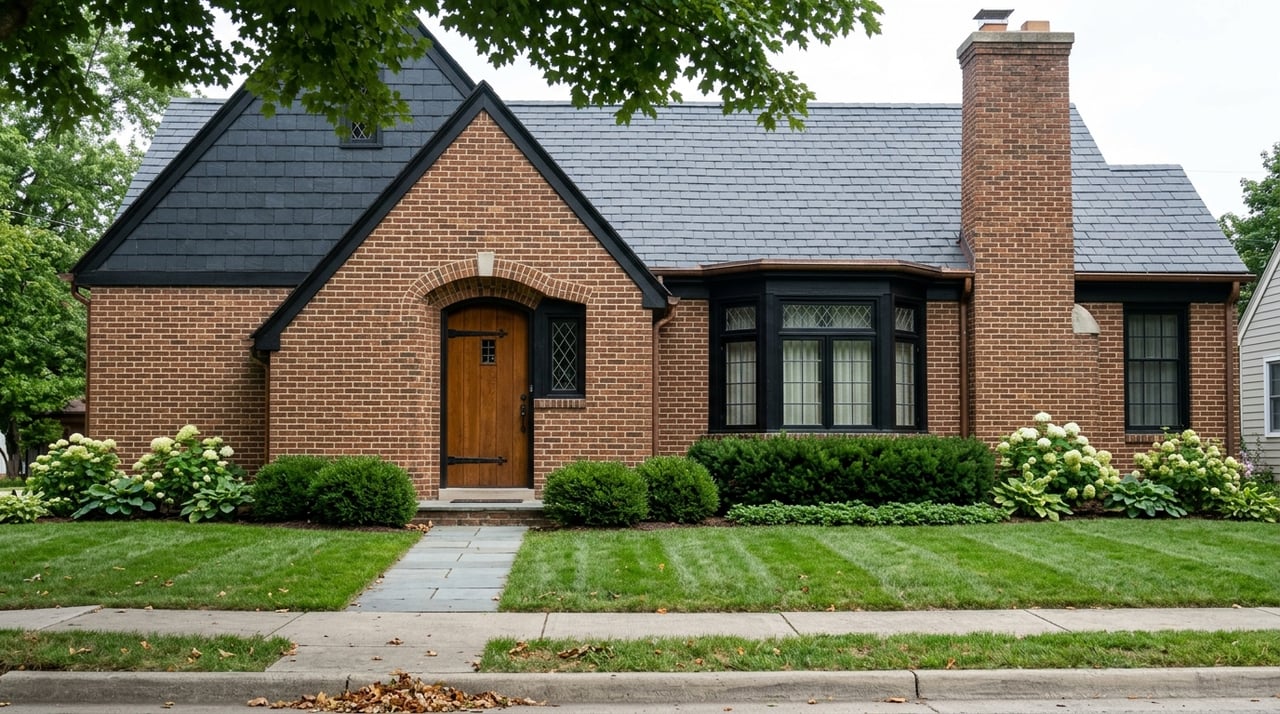
Tudor Revival homes are among the neighborhood’s most recognizable properties. Preservation writing from MKNA highlights details such as brick exteriors, half-timbered gables, and wooden oriel windows as examples of the style in Meridian-Kessler.
These homes often stand out for their texture and visual depth. If you are drawn to steep rooflines, storybook details, and a strong sense of craftsmanship, Tudor homes may be what first catches your eye here.
Colonial Revival Homes
Colonial Revival homes are another important part of the neighborhood mix. MKNA has pointed to examples with stone walls at the gable ends, slate roofs, and small Ionic porticos.
This style tends to feel formal, balanced, and enduring. Buyers who prefer symmetry and understated historic elegance often find Colonial Revival homes especially appealing.
Classical Revival Homes
Classical Revival homes also appear in Meridian-Kessler, adding another layer to the architectural mix. While they are not the only style present, they help reinforce the neighborhood’s broad design vocabulary.
If you appreciate homes with traditional proportions and references to classical detailing, these properties can offer a more stately look. In a neighborhood with many architectural expressions, that variety is part of what keeps the housing stock interesting.
How Architecture Changes by Area
One of the most useful things to know about Meridian-Kessler is that style patterns often shift by corridor or block. Local history sources note that American Foursquares are more common south of 44th Street, bungalows appear east of College Avenue, and larger period revival homes are more common west of College Avenue.
That matters when you are home shopping. It means your experience can change depending on where you focus your search, even within the same neighborhood boundaries.
If you want a broader mix of larger revival-style homes, one part of Meridian-Kessler may fit better. If you are drawn to bungalows or more modest early 20th-century homes, another area may feel like a better match. Understanding those patterns can help you narrow your search with more confidence.
Preservation and Neighborhood Character
Meridian-Kessler is often associated with historic preservation, but it is helpful to understand what that really means. The neighborhood itself is not one single designated historic district, though Forest Hills, Oliver Johnson’s Woods, and Washington Park are National Register districts within the broader neighborhood area.
That distinction matters for buyers and owners. It helps explain why the neighborhood has such a strong historic identity while still including different levels of formal designation and oversight.
The Meridian-Kessler Neighborhood Association also plays a role in protecting neighborhood character. Its Land Use and Code Compliance Committee reviews variance requests and looks at whether proposed projects fit the neighborhood plan, setbacks, and nearby architectural styles.
For homeowners, that can support a sense of continuity on the block. For buyers, it is one more reason Meridian-Kessler tends to retain a cohesive feel even as homes are updated over time.
Can Older Homes Be Updated?
Yes, and that is an important part of Meridian-Kessler’s appeal. Many homes here are not preserved as museum pieces. Instead, they are lived in, improved, and adapted for modern needs.
A clear local example is the Manor on Meridian, a 1930 Tudor-style home that was expanded by earlier owners and significantly renovated in 2017. Updates included a larger kitchen, an expanded family room, and a second staircase, while the home kept its historic identity.
That kind of example gives buyers a realistic picture of what is possible. If you love older architecture but also want modern function, Meridian-Kessler can offer both.
It is also helpful to know that National Register listing is not the same as local historic designation. MKNA notes that National Register recognition does not restrict owner-funded rehabilitation in the same way a separate local preservation designation might. That makes it especially important to understand the specific property and location before planning changes.
Daily Life in Meridian-Kessler
Architecture is only part of the story. Meridian-Kessler also stands out because the lifestyle feels connected, active, and convenient.
The neighborhood association identifies walkability and bike-friendliness as core goals. That matches what many residents and visitors experience on the ground, especially with the area’s connected streets, neighborhood nodes, and access to nearby destinations.
A major part of that lifestyle is the tree canopy. MKNA describes Meridian-Kessler as having a historic urban forest with lush shade across most streets, and that feature shapes the feel of the neighborhood in every season.
For many buyers, those mature trees are not just a visual bonus. They help define the atmosphere of the area and add to the sense of established neighborhood character that is harder to find in newer communities.
Monon Trail Access
The Monon Trail is one of the biggest lifestyle advantages nearby. Visit Indy describes it as a 26-mile trail with access points near 56th, 54th, 49th, and Broad Ripple.
That trail connection links you to a wide range of destinations, including Broad Ripple Village, Broad Ripple Park, the Indianapolis Arts Center, the Indiana State Fairgrounds, and downtown Indianapolis. If you value biking, walking, or simply having more ways to move through the city, this is a meaningful everyday benefit.
Neighborhood Traditions
Meridian-Kessler also has a long-standing annual home tour that dates back to 1973. According to the Encyclopedia of Indianapolis, it began as a way to promote property improvement and neighborhood spirit.
That tradition says a lot about how residents have viewed the area over time. There is a clear pattern of neighborhood stewardship here, and that often matters to buyers who want a place with a strong sense of continuity and care.
Dining and Culture Nearby
Meridian-Kessler supports a lifestyle where local amenities are part of your weekly routine. One example is Café Patachou at 49th and Pennsylvania, which Visit Indy identifies as a local institution since 1989.
That corner also has historic meaning. MKNA notes that 49th and Pennsylvania long served as a trolley-stop commercial node, and it still functions as a convenient daily-needs area today.
For arts and performance, Indianapolis Opera is located in Meridian-Kessler at the Basile Opera Center. That gives the neighborhood a cultural anchor close to home.
Broad Ripple adds another layer of convenience and activity nearby. Visit Indy describes it as a connected district with coffee shops, boutique shopping, trailside activity, and notable bars and restaurants, with access via the Monon Trail and Red Line.
What Buyers Often Love Most
When you step back, Meridian-Kessler’s appeal comes from how several features work together. It is not just the architecture, and it is not just the location.
Buyers are often drawn to the combination of:
- Historic homes with varied early 20th-century styles
- Mature trees and shaded streets
- Walkable, bike-friendly neighborhood goals
- Monon Trail access to major destinations
- Nearby dining and cultural amenities
- A visible tradition of preservation and property care
That blend creates a neighborhood experience that feels established but still practical for modern living. If you want a home with character and a location that supports daily convenience, Meridian-Kessler offers a compelling mix.
Why Meridian-Kessler Stands Out for House Hunters
Some neighborhoods make a strong first impression, but Meridian-Kessler tends to hold your attention the longer you explore it. The architecture has range, the streetscape has maturity, and the lifestyle advantages extend beyond the front door.
For buyers, that means you are not just choosing a house style. You are choosing a setting shaped by history, thoughtful stewardship, and access to some of the city’s most appealing amenities.
If you are considering Meridian-Kessler, it helps to work with a team that understands how block-by-block character, architectural variety, and lifestyle features all influence value and fit. When you are ready to explore homes in this distinctive Indianapolis neighborhood, connect with The Dakich Team.
FAQs
What architectural styles are common in Meridian-Kessler homes?
- Meridian-Kessler includes many early 20th-century styles, especially American Foursquare, bungalow, Colonial Revival, Tudor Revival, and Classical Revival homes.
What is the lifestyle like in Meridian-Kessler, Indianapolis?
- The neighborhood is known for mature trees, walkability and bike-friendly goals, access to the Monon Trail, nearby dining, and cultural amenities such as Indianapolis Opera.
Where are different home styles found in Meridian-Kessler?
- Local history sources note that American Foursquares are more common south of 44th Street, bungalows appear east of College Avenue, and larger period revival homes are more common west of College Avenue.
Can you renovate older homes in Meridian-Kessler?
- Yes, older homes in Meridian-Kessler are often updated for modern living, and local examples show that significant renovations can preserve historic character while improving function.
Is Meridian-Kessler a single historic district?
- No, Meridian-Kessler is not one single designated historic district, but it does include National Register districts such as Forest Hills, Oliver Johnson’s Woods, and Washington Park within the broader neighborhood area.