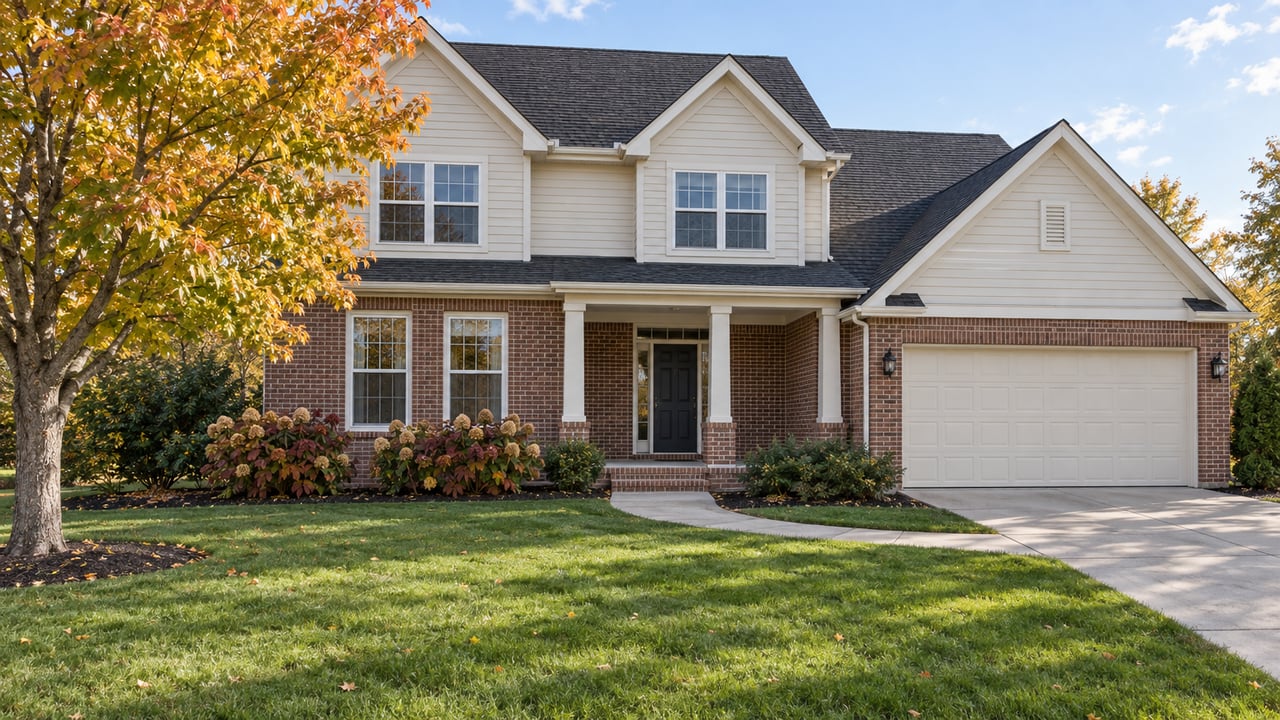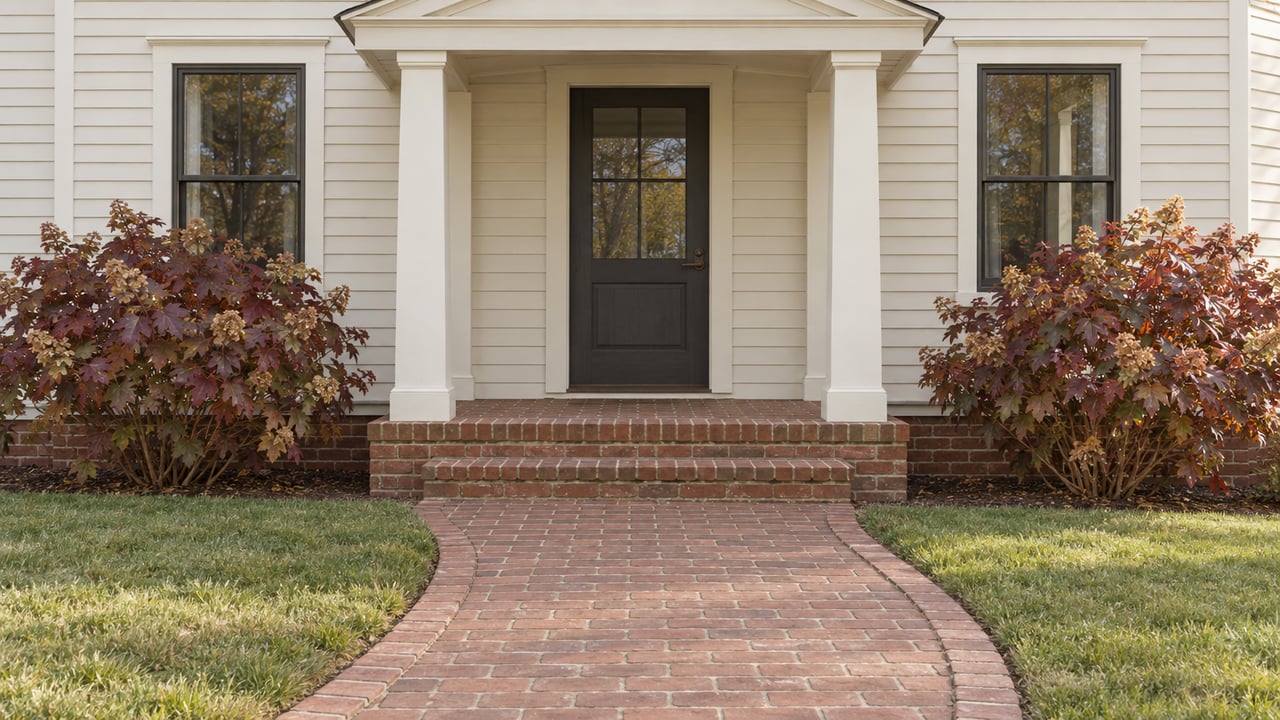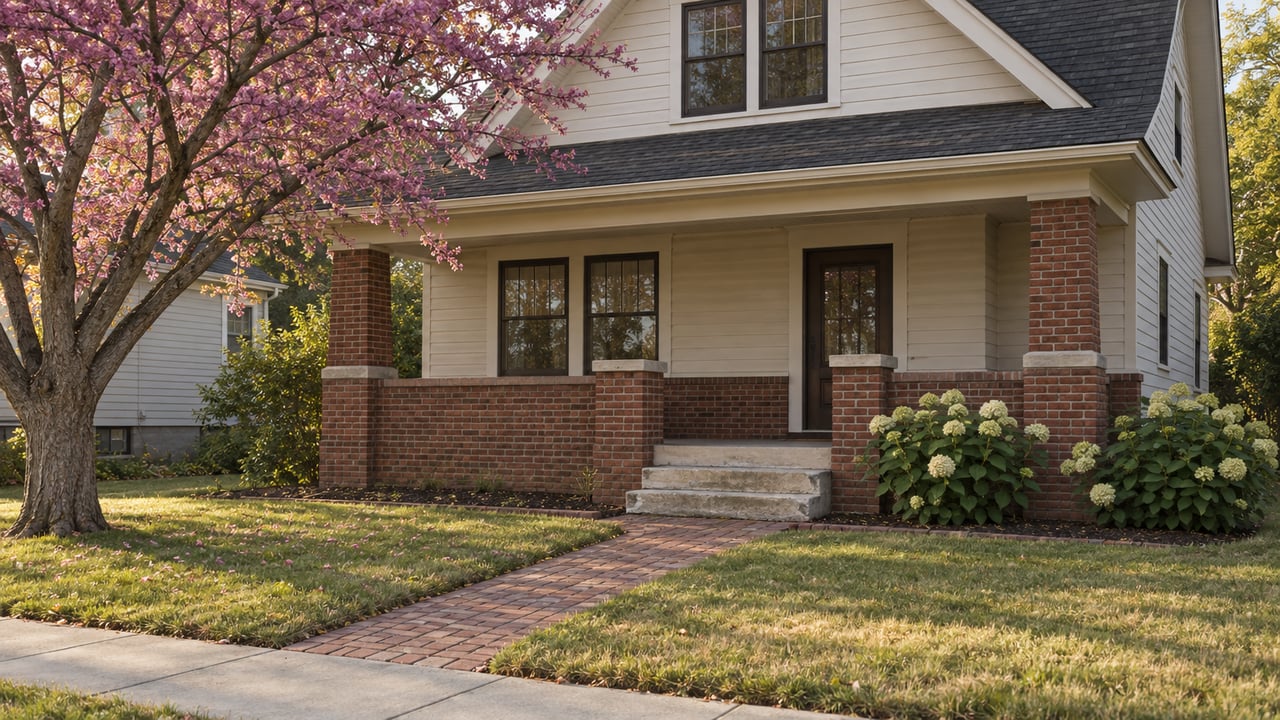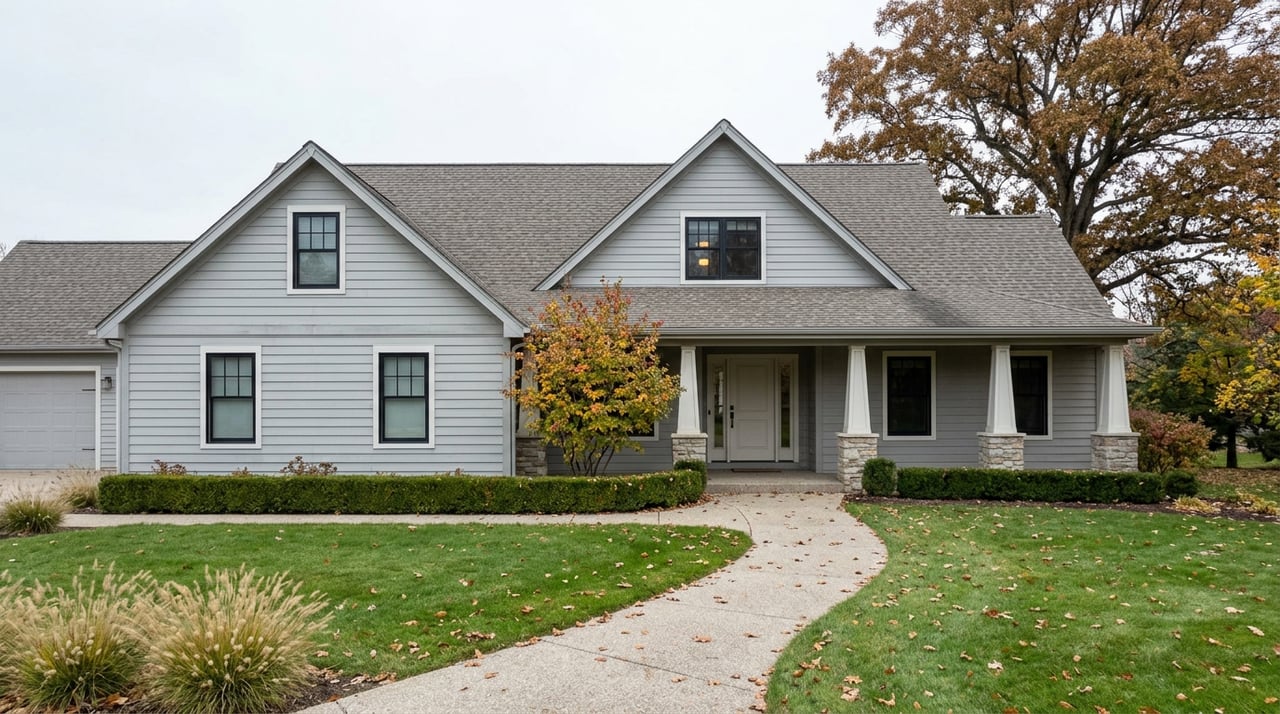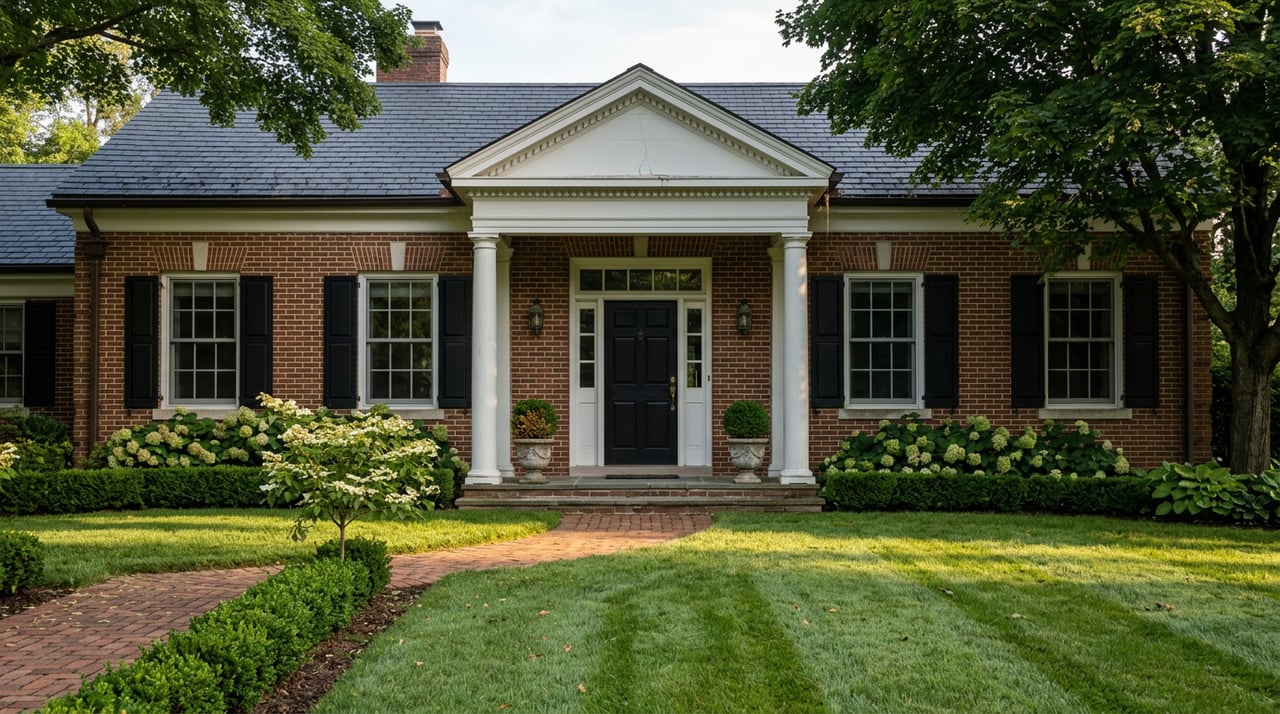
Walk from a driveway on Forest Boulevard toward 86th Street on any Saturday morning and you cross an invisible line before you ever reach a storefront. The lawns thin into a tree canopy, the road narrows, and then you are standing at a pedestrian signal that the Monon Trail's own planners installed years ago. That crossing is the whole relationship between Meridian Hills, Williams Creek, and the commercial strip that actually feeds their daily life, in miniature. You live inside one boundary. You shop, eat, and walk your dog inside another.
That's the part of living here that outsiders miss and residents mostly stop noticing: neither Meridian Hills nor Williams Creek contains a restaurant, a grocery store, or a retail storefront within its own limits. Everything that makes this stretch of the north side livable, the plaza, the trail, the country club's neighbors, sits just across a line these two towns don't govern. Recent changes at Nora Plaza have brought that boundary into focus.
Two Towns With No Storefronts of Their Own
Meridian Hills and Williams Creek are both separately incorporated towns inside Marion County, each running its own streets, its own engineer, its own small government, distinct from the City of Indianapolis next door. Public write-ups consistently put Meridian Hills at roughly 715 homes spread across 1.5 square miles, home to somewhere near 1,800 residents. Williams Creek is smaller still. Niche lists its population at 417.
Even the digital map of this place disagrees with itself. Nextdoor draws its own combined "Williams Creek - Meridian Hills" boundary and counts 1,145 residents inside it, a number that maps to neither town's actual borders. If you've ever tried to look up basic facts about your own neighborhood online and come away more confused than when you started, that's why. The towns are real and small. The internet's version of them is a composite that doesn't match either one.
What both towns share is an absence. Aside from St. Luke Catholic Church, whose parish traces back to 1948 when the Archdiocese of Indianapolis bought the land, and the Meridian Hills Country Club's private course, there is no commerce inside either town. Your coffee, your dinner, your last-minute gift, all of it happens in unincorporated Nora, a business district neither town has any authority over.
Recent Changes at Nora Plaza
As the Indianapolis Business Journal reported, Nora's retail core sits inside Nora Plaza, a shopping center owned by Indianapolis-based Kite Realty, which acquired the property in 2022 and has spent the years since remaking it. Kite isn't a neighborhood landlord in any small sense. The company holds interests in 180 shopping centers nationwide, more than 28 million square feet of leasable space. Kite Realty makes leasing decisions for Nora Plaza, while town councils govern within their respective town limits.
The tenant list shows it. West Elm relocated from the Fashion Mall at Keystone to Nora Plaza in May 2024. Fox Restaurant Concepts, the Phoenix-based company led by James Beard semifinalist Sam Fox, opened its first two Indianapolis locations there in February 2025: Culinary Dropout, an American comfort food spot with a wide-ranging menu, and Flower Child, a fast-casual concept sharing a building with Garbanzo Mediterranean Fresh and a Bank of America branch. Bluemercury, a luxury beauty retailer making its Indiana debut, opened a Nora Plaza location in 2024 alongside a second shop at Clay Terrace in Carmel.
Not every tenant is new. Bagel Fair has anchored a corner of the plaza for decades, run today by Max Pauker, whose mother took over the shop from its founder before her death in 2020. Pauker's read on the renovation, as quoted by the Indianapolis Business Journal, is blunt:
"It looks better than it ever has, and I've been looking at this place for my entire life."
Big Lug Canteen, sitting right alongside the Monon Trail in Nora, has been open since 2015 and predates all of the redevelopment around it.
The Trail Still Connects You, and It's Not Torn Up
The Monon Trail's stretch from Nora to Broad Ripple runs about 3.4 miles and does more work for this neighborhood than any single business opening. According to the Nora Alliance, the section crosses the White River, the White River overflow, and the Central Canal, linking Nora's commercial strip to the Indiana School for the Blind, the Jordan YMCA, and the Indianapolis Art Center's outdoor ARTSPARK on the Broad Ripple side. The 86th Street crossing, the one at the edge of Williams Creek, got its own pedestrian-activated signal specifically because that intersection is busy enough to need one.
If you've heard this year that the Monon has construction problems, that's a different stretch. The section running through Westfield, well north of here, has been closed since March 3 and stays shut through the end of 2026 while crews build a tunnel under 161st Street. The Nora-to-Broad Ripple segment residents actually use has had no such interruption this year. Worth knowing before you plan a longer ride north.
Beyond Nora Plaza's Footprint
None of Nora Plaza's turnover reaches the places that have anchored this neighborhood for generations. A few, in plain terms:
- HollyHock Hill, the family-style Indiana fried chicken restaurant on North College Avenue, opened in 1928.
- Meridian Hills Country Club, whose 18-hole course was designed by architect Bill Diddel, still runs its own calendar independent of anything happening at the plaza a few minutes away.
- Northside Social, an upscale bar and restaurant known for its wine list, has become a fixture for an evening out without changing hands in the recent wave of redevelopment.
These places sit outside the plaza's footprint, separate from the redevelopment there.
Town Decisions and Nora Plaza Changes
The Town of Meridian Hills ran its annual road resurfacing program starting June 8, 2026, handled by contractor Howard Companies and completed within about a week, weather permitting. The project was scoped by the town's engineer, David Borden, based on the town's pavement assessments.
Town road work and Nora Plaza leasing decisions are handled separately.
St. Luke's Fall Fest
St. Luke Catholic Church's Fall Fest is set for September 18 and 19. Friday is an adults-only bash. Saturday is the Family Fun Day, which the parish's own site says draws more than 1,500 attendees for games, food, and a silent auction that funds the parish school. The event runs on the same weekend it always has, decided by the same parish that has occupied this land since 1948.
For residents, the distinction is practical: Nora Plaza's retail changes take place outside the towns' boundaries, while town governments handle local matters such as road resurfacing. Keeping both in view helps put changes at Nora Plaza in context.
If you're weighing what a home in Meridian Hills or Williams Creek is actually worth in a market shaped by changes like these, The Dakich Team can walk you through it, or run a complimentary valuation if you're already living the routine and wondering what's next.