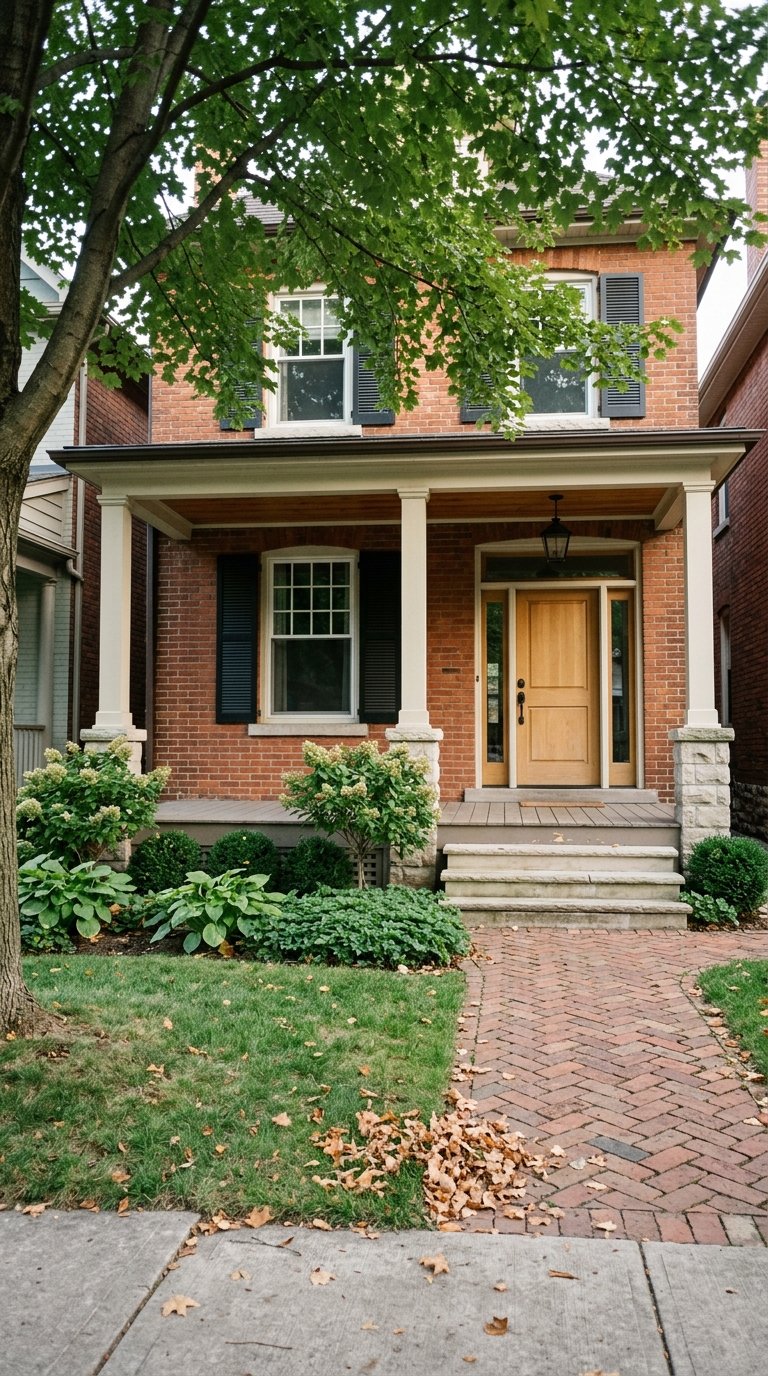
If you are torn between historic charm and newer suburban convenience, Noblesville gives you a real choice. Some buyers picture a home near the Courthouse Square with older architecture and easy access to downtown destinations, while others want a newer neighborhood with more space, planned amenities, and quick road access. The good news is that both lifestyles exist here, and each comes with clear advantages. Let’s dive in.
Historic core living in Noblesville
Noblesville’s historic core centers on the Courthouse Square and a compact cultural district of about 50 square blocks. City and state materials describe this area as a long-running hub of government and commerce, with the town platted in 1823 and serving as county seat starting in 1824.
That history still shapes the feel of the area today. Near downtown, you will find older housing stock and preserved architectural styles, including references to Queen Anne and Italianate homes on streets such as Conner. In practical terms, this part of Noblesville tends to feel more established, more street-oriented, and more rooted in the city’s early development.
What the historic core feels like day to day
If you like the idea of walking to coffee, dinner, events, or local shopping, downtown Noblesville is the strongest fit. The city approved Hamilton County’s first DORA in downtown Noblesville and describes the square and surrounding area as a social, walkable district with entertainment, dining, and shopping.
That kind of daily routine feels different from life in a typical subdivision. Instead of driving out of a neighborhood for every errand, you may be able to combine trips and enjoy a more compact pattern of living. For many buyers, that is a major part of the appeal.
Parking and access downtown
Walkability is a benefit, but it also comes with a different parking rhythm. Hamilton County notes a mix of parking options around the square, including garages, time-limited on-street spaces, and access around civic buildings like the historic courthouse and judicial center.
If you are comparing areas, this is an important tradeoff to understand. In the historic core, convenience often comes from proximity and shorter non-car trips, not from large private driveways and broad subdivision streets.
Parks and trails near downtown
The historic core also connects well to civic spaces and recreation. Federal Hill Commons sits just across the White River from historic downtown and is accessible by car, foot, or bike.
You also have trail connections that reinforce downtown living. The Forest Park Trail links Forest Park with downtown Noblesville and Potter’s Bridge Park, while Riverwalk Depot Pocket Park connects downtown to the White River trail system.
Historic district rules to know
One of the biggest questions buyers ask is whether owning in the historic core means more oversight for exterior changes. In many cases, yes. The city’s historic district guidelines address architectural character, scale and massing, orientation, demolition, signage, new construction, and landscaping.
That does not automatically make historic living harder, but it does mean you should go in with a clear understanding of the process. If you love older homes and established streetscapes, those standards may help preserve the look and feel that drew you there in the first place.
Suburban enclaves in Noblesville
If the historic core reflects Noblesville’s past, the suburban enclaves reflect its ongoing growth. The city’s residential analysis found that large-lot single-family detached homes made up 77% of the housing inventory, and current planning materials identify low-density single-family suburban residential as a standard zoning category.
That pattern helps explain why so many buyers think of Noblesville as a place for space, newer homes, and neighborhood-style living. In the outer areas, you are more likely to find broader lot patterns, newer floor plans, and car-oriented daily routines.
How newer neighborhoods are evolving
Noblesville’s growth is not just about traditional subdivisions. The city’s newer edge areas increasingly include master-planned communities with a broader mix of uses and amenities.
Examples include Gatewood Lakes on the east side, a community of more than 1,100 acres at 146th and Olio, Hyde Park near Hamilton Town Center and Exit 210 on 274 acres, and RiverWest at River Road and 146th, a mixed-use development with apartments, retail, and townhomes. These projects show how newer neighborhoods in Noblesville can offer more than just houses on curving streets.
What daily life looks like in suburban enclaves
In newer neighborhoods, convenience often comes from internal planning rather than a walk-to-the-square lifestyle. Hyde Park includes trails, park and open space, and neighborhood-serving retail. Gatewood Lakes is planned with green space, shoreline, and a golf-cart-oriented community layout.
For many buyers, that means daily life feels organized around neighborhood amenities, nearby retail nodes, and driving routes. You may trade some downtown compactness for newer construction, more square footage, and a different kind of convenience.
Trails and recreation beyond downtown
Choosing a suburban enclave does not mean giving up access to trails or outdoor space. Noblesville says it has more than 127 miles of trails, sidewalks, and greenways, and the Midland Trace Trail connects Noblesville to Westfield, Carmel, and the Monon Trail.
That broader network matters because it gives buyers options across the city. While the downtown area has the strongest concentration of shops, events, and civic spaces within a compact area, the outer neighborhoods still benefit from citywide trail access and planned open space.
Historic core vs suburban enclaves
The best choice usually comes down to how you want your day to flow. Both parts of Noblesville can work well, but they support different routines and priorities.
Here is a simple side-by-side look at the main differences.
| Feature | Historic Core | Suburban Enclaves |
|---|---|---|
| Overall feel | Established, compact, street-oriented | Newer, lower-density, neighborhood-oriented |
| Home styles | Older housing stock, preserved architectural character | Newer floor plans and broader lot patterns |
| Daily errands | Stronger walk-to-downtown potential | More often car-based or centered on planned amenities |
| Parking pattern | Garages and time-limited on-street parking around downtown | More typical subdivision-style parking and drive access |
| Recreation access | Close to downtown parks, trails, and civic spaces | Often connected through neighborhood amenities and citywide trails |
| Exterior changes | May involve historic district guidelines | Typically fewer design controls of that type |
| Commute style | Better for short in-town trips and downtown errands | Better for drivers wanting major road access and newer suburban settings |
How to choose the right fit
If you are deciding between these two lifestyles, start with your routines rather than just the house itself. Think about how often you want to walk to dining or events, how much space you want indoors and out, and whether you prefer historic character or newer construction.
You should also think about how you feel about maintenance, updates, and exterior design rules. A home near the historic core may offer distinctive character and a more connected downtown experience, while a newer enclave may give you a more turnkey layout and amenity-driven setting.
Buyers who may prefer the historic core
The historic core may suit you if you want:
- A more compact, walkable setting
- Easy access to downtown dining, shopping, and events
- Older homes with architectural character
- Proximity to civic spaces and trail connections
- A more established street pattern and neighborhood feel
Buyers who may prefer suburban enclaves
A suburban enclave may suit you if you want:
- A newer home or newer community design
- More interior space or larger lot patterns
- Neighborhood amenities such as trails, open space, or planned retail
- Quick access to major roads and growth corridors
- A daily routine built more around driving than downtown walking
Why this decision matters when you buy
In a market like Noblesville, choosing the right area is about more than style. It affects your commute, your weekends, your maintenance expectations, and how connected you feel to the places you visit most often.
That is why local guidance matters. When you compare the historic core and suburban enclaves through the lens of everyday life, the right choice usually becomes much clearer.
If you are weighing older homes near downtown against newer communities on the edges of Noblesville, working with a team that knows Hamilton County block by block can help you focus on the options that actually match your goals. When you are ready to explore Noblesville with a local, high-touch strategy, connect with The Dakich Team.
FAQs
What defines the historic core in Noblesville?
- The historic core centers on the Courthouse Square and a cultural district of roughly 50 square blocks, with older housing stock and more preserved architectural character near downtown.
Does buying near downtown Noblesville mean more rules for exterior changes?
- In many cases, yes. Historic district guidelines can address architectural character, demolition, new construction, landscaping, signage, and other exterior considerations.
Are newer Noblesville neighborhoods only traditional subdivisions?
- No. Noblesville’s outer growth areas increasingly include master-planned communities such as Gatewood Lakes, Hyde Park, and RiverWest.
Is downtown Noblesville the only walkable area?
- No, but downtown has the strongest concentration of restaurants, events, shopping, and civic space within a compact area.
Do suburban enclaves in Noblesville still have access to parks and trails?
- Yes. Many planned communities include trails or open space, and the citywide network includes more than 127 miles of trails, sidewalks, and greenways.
Which part of Noblesville is better for commuting?
- It depends on your routine. The historic core is often better for short in-town trips and downtown errands, while outer growth corridors may better suit drivers who want easier access to major roads.