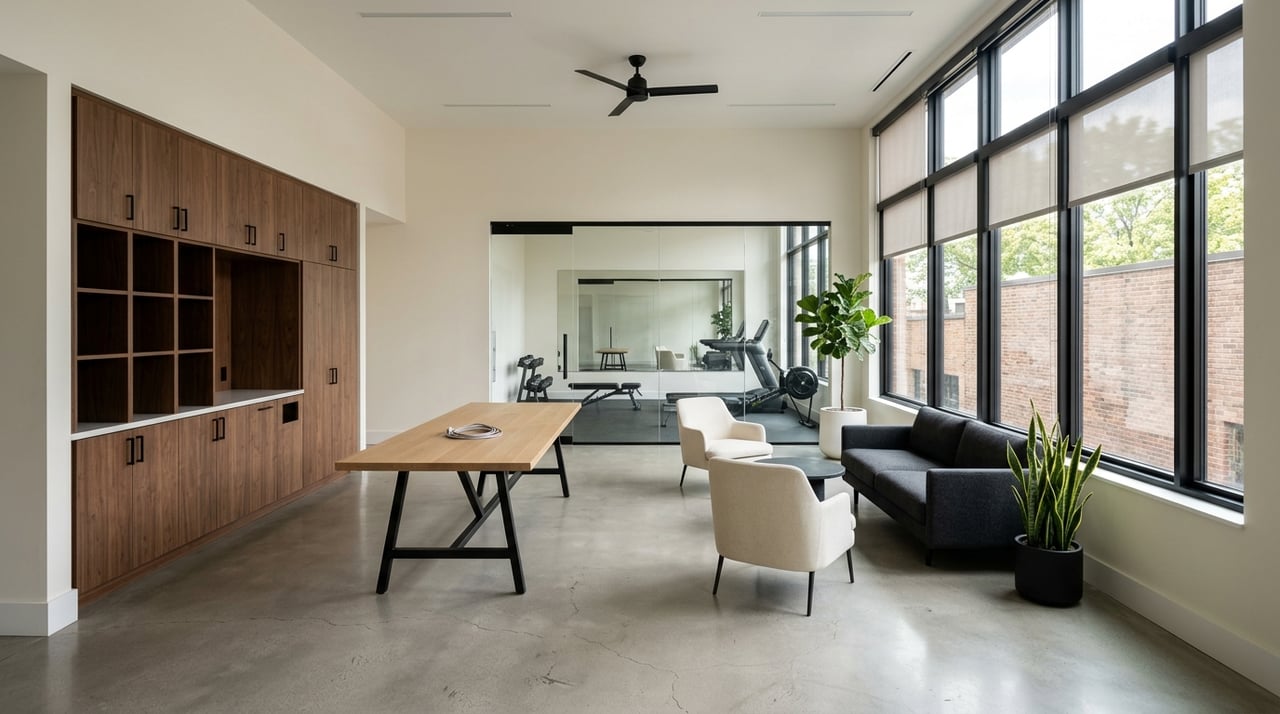
Looking for a home downtown is exciting, but the word amenities can mean very different things from one building to the next. You may be wondering whether a pool, rooftop deck, fitness center, garage, or private outdoor space is worth the monthly cost, or whether location alone delivers most of the lifestyle you want. This guide will help you understand how amenity-rich downtown Indianapolis living really works, what to compare across building types, and what to review before you buy. Let’s dive in.
Downtown amenities go beyond the building
In downtown Indianapolis, your lifestyle is shaped by both your home and the surrounding neighborhood. Downtown Indy Alliance describes the area as having more than 350 restaurants, bars, and coffee shops within a two-mile radius, along with the 8-mile Indianapolis Cultural Trail and the 3-mile Downtown Canal loop.
That matters because an amenity-rich lifestyle is not only about what sits behind your front door. In many cases, walkability, trail access, nearby dining, and public spaces can do as much for your day-to-day routine as a long list of in-building features.
Building types shape the amenity mix
Downtown Indianapolis offers condos, lofts, and townhomes, and each tends to deliver amenities in a different way. The Downtown Indy housing directory includes options such as Broadway Lofts, Shively Carter Townhomes, and Watermark Townhomes, with filters for bike storage, pet friendly features, pools, rooftop decks, and fitness centers.
If you are comparing homes downtown, it helps to think less about which building has the longest amenities sheet and more about which setup fits your habits best. Some buyers want a full-service feel, while others prefer character, privacy, or lower reliance on shared spaces.
Full-service towers focus on shared lifestyle
At the higher-amenity end of the market, some buildings are built around shared common spaces and service-oriented living. For example, 360 Market Square includes a fifth-floor amenity deck, resort-style pool and sundeck, fitness center, bark park, pet spa, courtyards, and a parking garage.
This kind of setup may appeal to you if you want your home to cover several parts of daily life in one place. If you like the idea of working out at home, relaxing by the pool, having pet-focused features, or using shared gathering areas, this model can feel very convenient.
Condo buildings often balance amenities and design
Some downtown condo communities offer substantial amenities while keeping a more residential feel. Indianapolis Athletic Club Condos includes a basketball gym, fitness center, racquetball and squash courts, virtual golf, storage, a conference room, and extensive common area.
Other buildings lean into design and outdoor living in a different way. The Hudson, for example, adds rooftop gardens with skyline views, which highlights how some condo buyers may value atmosphere and style just as much as a long feature list.
Lofts tend to prioritize character and location
Loft-style buildings often offer a different kind of appeal. At 800 CAP, amenities include a courtyard, roof deck, and 24/7 fitness room, while Temple Lofts features vaulted ceilings, French balconies, controlled building access, and free lot parking.
These examples show that loft living may be more about architecture, layout, and downtown access than resort-style extras. If you care most about unique design, historic character, or being close to the heart of downtown, a loft may check more boxes than a building with a larger shared amenity package.
Townhomes often emphasize privacy and parking
Townhome living downtown tends to shift the focus again. Shively Carter Townhomes includes in-unit washer and dryers, security systems, fully appointed kitchens and baths, and two-car below-unit garages.
Watermark Townhomes offers upper decks, a private side yard, and patio and landscaping features. For many buyers, that means townhomes deliver value through private outdoor space and attached parking rather than through shared fitness clubs or pool decks.
Some communities prioritize personalization
Not every buyer wants a long amenities menu. Park10, a for-sale condo and townhome community in Chatham Arch, emphasizes personalization, energy efficiency, and location.
That can be a strong fit if you care more about how your home lives day to day than about shared extras you may rarely use. For some buyers, a well-designed unit in the right downtown location offers more practical value than a building packed with features.
What amenities are really worth paying for?
The best amenities are the ones you will actually use. A rooftop deck sounds appealing, but if you spend most evenings on the trail, at the canal, or meeting friends nearby, that feature may matter less than secure parking or package handling.
A smart way to evaluate amenities is to ask what they replace in your current routine. For example, a fitness center might replace a gym membership, shared work areas might reduce the need for outside workspace, and pet features might make daily life easier if you have an animal companion.
Compare amenities to your actual habits
Before you get attached to a building, make a short list of your non-negotiables. Think about what supports your lifestyle most directly:
- Parking needs
- Private outdoor space
- Fitness access
- Pet-related features
- Bike storage
- Controlled access
- Storage space
- Guest and package handling
When you compare buildings this way, the decision usually becomes clearer. You are not choosing the most impressive brochure. You are choosing the setup that best supports how you live.
HOA dues are part of the equation
Amenities are only one side of the story. The other side is monthly carrying cost, especially in condo and townhome communities with shared systems and common areas.
The Consumer Financial Protection Bureau says condo or HOA dues are usually paid directly rather than included in your monthly mortgage payment, and those dues can range from a few hundred dollars a month to more than $1,000. That is why it is important to look at the full monthly picture, not just principal and interest.
Why dues can vary so much
Shared amenities and shared infrastructure cost money to operate and maintain. Budget guidance referenced by HUD shows that condo budgets should account for maintenance and preservation of amenities and features, insurance, replacement reserves, and deferred maintenance.
In practical terms, dues may help cover items such as elevators, staffing, utilities for common areas, parking structures, building maintenance, and reserve funding. That does not mean a heavily amenitized building is automatically a poor value, and it does not mean a simpler building is automatically cheaper over time.
Smaller amenity packages do not always mean lower costs
This is one of the biggest misunderstandings buyers have. A building with fewer visible amenities may still have significant operating expenses, deferred maintenance needs, or reserve obligations.
On the other hand, a building with more amenities may be financially sound if reserves are well funded and the budget is managed carefully. The goal is not to avoid amenities. The goal is to understand what you are paying for and whether the building appears well maintained and well planned.
Special assessments can affect affordability
Monthly dues are not the only number to review. Special assessments can quickly change the cost of ownership in a condo or townhome community.
The CFPB treats association special assessments as mortgage-related obligations in some underwriting situations, and HUD’s condo documentation checklist asks for any pending or current special assessments. If a building is planning a large repair or capital project, that can directly affect your budget.
Ask direct questions early
When you are seriously considering a building, ask whether there are any current or pending special assessments. Also ask whether major projects are expected in the near future and how reserve funding is being handled.
These questions are not about being overly cautious. They are about understanding your real ownership costs before you commit.
What to review before choosing a building
If you are buying into a condo or townhome community downtown, the governing documents matter as much as the finishes inside the unit. Marketing materials may highlight the lifestyle, but the official documents control how the community operates.
HUD’s condo documentation checklist includes legal and governing documents, the declaration or master deed, bylaws, articles of incorporation or association, recorded plats and site plans, the current budget, year-to-date and prior-year financials, reserve study documentation, special-assessment support, and insurance records.
Indiana rules matter too
Indiana law separately recognizes condominiums and homeowners associations. State law also requires an annual budget, budget notice, and member access to financial records and board minutes in the HOA context.
For you as a buyer, this means the financial and operational side of the community should be reviewed carefully, not treated as an afterthought. Good due diligence helps you understand both the lifestyle and the obligations that come with ownership.
Focus on rules that affect daily life
The most useful review is often the simplest one: do the building’s rules match the way you want to live? Governing documents can address details such as pet policies, leasing limits, renovation hours, rooftop or grill access, guest policies, storage, and package handling.
That is especially important downtown, where two buildings may look similar on the surface but function very differently in practice. The governing documents, not the brochure, set the rules.
How to decide what fits you best
A great downtown home is not just the one with the longest features list. It is the one that supports your schedule, your budget, and the level of convenience you want day to day.
You might prefer a full-service tower with strong shared amenities, a condo with standout common spaces, a loft with character and location, or a townhome with attached parking and private outdoor space. Downtown Indianapolis offers all of those paths, and the best choice depends on what you will truly use and value.
If you want help comparing downtown Indianapolis condos, lofts, and townhomes with a clear eye on lifestyle, monthly costs, and community rules, The Dakich Team can help you make a confident decision.
FAQs
What does amenity-rich living in downtown Indianapolis usually include?
- Amenity-rich living can include features such as fitness centers, pools, rooftop decks, pet amenities, bike storage, parking, shared courtyards, and controlled access, along with downtown access to restaurants, trails, and the canal.
Are HOA dues in downtown Indianapolis included in my mortgage payment?
- Usually no. The CFPB says condo or HOA dues are typically paid directly rather than included in the monthly mortgage payment.
Do more amenities always mean a better downtown Indianapolis condo?
- Not always. The best amenity package is the one that fits your actual routine, budget, and priorities.
Can a downtown Indianapolis building with fewer amenities still be a good value?
- Yes. Some buyers place more value on location, design, private parking, private outdoor space, or lower reliance on shared common areas.
What documents should I review before buying a downtown Indianapolis condo or townhome?
- Ask to review the governing documents, budget, financial statements, reserve documentation, insurance records, and any information about current or pending special assessments.
Why do special assessments matter in downtown Indianapolis communities?
- Special assessments can increase your cost of ownership beyond regular monthly dues, so it is important to ask about them before you buy.